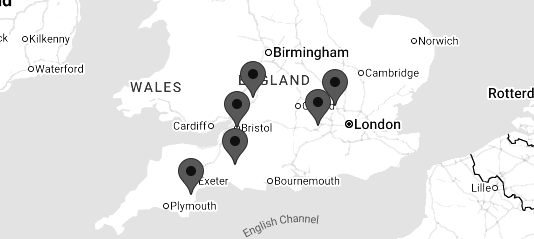
Bristol, Gloucestershire, Wiltshire, Somerset, Dorset, Devon, Cornwall and the South West
MULTI AWARD WINNING IT SUPPORT, SOLUTIONS AND SERVICES
Endpoint Detection
Response. EDR.
"I would have no hesitation in recommending Soltech.”
Janie Tucker, Managing Director, Waste-Disposer Warehouse






SME
Endpoint Detection and Response (MDR)
Corporate
Endpoint Detection and Response (MDR)
Charity
Endpoint Detection and Response (MDR)
Public Sector
Endpoint Detection and Response (MDR)
Your Devices Are a Gateway Into Your Business
Every laptop, desktop and server connected to your network represents a potential entry point for a cyber attack.
Cyber criminals can use phishing, stolen credentials, malicious software and vulnerabilities to gain access to a single device and then attempt to move further into your organisation.
Traditional antivirus is important, but modern cyber attacks increasingly involve techniques that may not look like traditional malware.
Endpoint Detection & Response (EDR) provides a more advanced layer of protection by continuously monitoring devices for suspicious behaviour, investigating potential threats and helping security teams respond quickly.
At Soltech IT Ltd, we provide managed endpoint security designed to protect your business devices while giving our security specialists greater visibility of potential threats.
What is Endpoint Detection & Response?
Endpoint Detection & Response is a cyber security technology that continuously monitors computers and servers for suspicious activity.
Instead of simply asking: "Is this file a virus?"
EDR looks at the wider behavior of the device.
It can identify activity such as:
- Suspicious processes
- Malicious scripts
- Unusual applications
- Attempts to disable security software
- Credential theft
- Privilege escalation
- Unusual network connections
- Lateral movement
- Ransomware behavior
This allows potential attacks to be detected earlier and investigated more effectively.
Why Traditional Antivirus Isn't Enough
Traditional antivirus remains an important part of endpoint protection, but modern attackers increasingly use techniques designed to avoid conventional detection.
For example, attackers may use legitimate Windows tools such as PowerShell or remote administration utilities rather than installing an obvious piece of malware.
EDR looks at behavior and context, helping identify activity that may otherwise appear legitimate when viewed in isolation.
This makes EDR an important component of a modern layered cyber security strategy.
What Does EDR Protect?
EDR can protect a wide range of business endpoints, including:
- Desktop computers
- Laptops
- Windows workstations
- Servers
- Remote devices
- Hybrid working devices

Depending on your environment, endpoint protection can also be integrated with wider Microsoft security technologies and managed detection and response services.
How EDR Detects Threats
EDR continuously collects security information from protected devices.
This can include:
Process Activity
Which applications and processes are running and what they are attempting to do.
File Activity
Changes to files and folders that could indicate malicious activity.
Network Connections
Where a device is communicating and whether those connections appear suspicious.
User Activity
Whether unusual actions are being performed under a particular user account.
System Changes
Changes to security settings, system configuration or other areas commonly targeted by attackers.
Security analytics can then identify activity that matches known attack techniques or suspicious behavioural patterns.
EDR and Ransomware Protection
Ransomware can spread extremely quickly once an attacker gains access to a device.
EDR can monitor for behaviours associated with ransomware, such as unusual file modification or encryption activity.
Where appropriate, a compromised device can be isolated from the network to help prevent the threat spreading to other systems.
This can be particularly important where an attacker has gained access through:
- Phishing
- Malicious attachments
- Compromised credentials
- Exploited vulnerabilities
- Remote access
EDR should form part of a broader ransomware protection strategy alongside secure backups, patch management, MFA and user awareness.
Detecting Fileless Attacks
Not every cyber attack requires an attacker to install a traditional malicious file.
Some attacks use legitimate operating system tools and scripts to carry out malicious activity.
These are sometimes referred to as fileless attacks.
Because EDR monitors behavior rather than relying exclusively on traditional malware signatures, it can provide additional visibility into these types of attacks.
What Happens When EDR Detects a Threat?
EDR can provide security teams with detailed information about what happened on a device.
This can help answer questions such as:
- What started the attack?
- Which user account was involved?
- What processes were executed?
- Which files were accessed?
- What systems did the device communicate with?
- Did the attacker attempt to escalate privileges?
- Did the threat spread elsewhere?
Where appropriate, security teams can then take containment actions.
These may include:
- Isolating the endpoint
- Stopping malicious processes
- Removing malicious files
- Blocking malicious activity
- Securing compromised accounts
- Investigating related devices
- Restoring the endpoint to a secure state
EDR + Managed Detection & Response
EDR and MDR work particularly well together.
EDR provides the technology and visibility.
MDR provides the monitoring, investigation and response.
This combination provides a significantly stronger security capability than relying on endpoint antivirus alone.
Soltech IT can combine endpoint protection with managed detection and response so that suspicious activity can be investigated by security specialists rather than simply generating an alert that nobody has time to investigate.
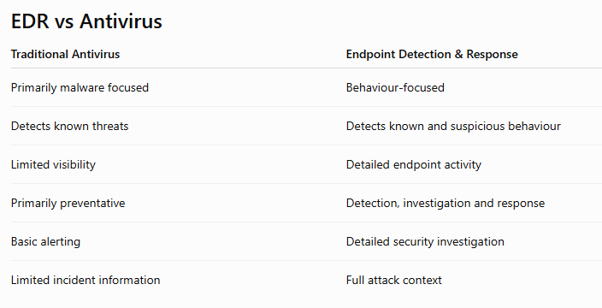
EDR does not necessarily replace every existing security control. Instead, it provides a more advanced layer of protection and visibility.
Discover the right certification for your business.
Explore Cyber Essentials and Cyber Essentials Plus.
EDR and Microsoft 365
For organisations using Microsoft 365, endpoint security can form part of a broader Microsoft security strategy.
Soltech IT can help integrate endpoint security with:
- Microsoft Defender
- Microsoft Intune
- Microsoft Entra ID
- Conditional Access
- Multi-Factor Authentication
- Device Compliance
- Microsoft 365 security controls
This helps ensure that users, identities, applications and devices are protected as part of one overall security strategy.
Keeping Remote Workers Secure
Remote working has changed the way businesses need to protect their devices.
A laptop may spend very little time connected to the corporate network, meaning traditional perimeter-based security isn't enough.
EDR provides protection directly on the endpoint, helping maintain visibility and security whether the device is:
- In the office
- Working from home
- Travelling
- Connected to public Wi-Fi
- Working from another location
Who Needs Endpoint Detection & Response?
EDR is suitable for businesses of all sizes, particularly organisations that:
- Have remote workers
- Use laptops extensively
- Store sensitive information
- Have multiple locations
- Use Microsoft 365
- Need stronger ransomware protection
- Have cyber insurance requirements
- Want advanced threat detection
- Don't have an internal security team
This includes:
- Small and medium-sized businesses
- Professional services
- Accountants
- Solicitors
- Manufacturers
- Engineering companies
- Schools
- Multi Academy Trusts
- Healthcare organisations
- Construction businesses
- Charities
- Technology companies
Speak to Soltech IT about your businesses Cyber Security needs
Contact Us
Why Choose Soltech IT for EDR?
Soltech IT provides more than just endpoint protection software.
We can help you select, deploy, configure and manage your endpoint security as part of a complete cyber security strategy.
Our services can include:
- Endpoint security deployment
- EDR configuration
- Security policy configuration
- Device monitoring
- Threat investigation
- Incident response
- Device isolation
- Microsoft 365 integration
- Vulnerability management
- Security reporting
- Ongoing management
And because Soltech IT can also provide your wider IT support, we can make changes to affected systems quickly when a security incident occurs.
Go Beyond Endpoint Protection
EDR is an important component of cyber security, but no single technology can protect your business from every threat.
We can combine EDR with:
- Managed Detection & Response
- Cyber Essentials
- Cyber Essentials Plus
- Penetration Testing
- Cyber Security Auditing
- Email Security
- Microsoft 365 Security
- Vulnerability Management
- Security Awareness Training
- Phishing Simulation
- Dark Web Monitoring
- Backup & Disaster Recovery
- Incident Response
Together, these services provide multiple layers of protection against modern cyber attacks.
Frequently Asked Questions
Is EDR the same as antivirus?
No. Antivirus primarily focuses on detecting and preventing malicious software. EDR provides much greater visibility into endpoint activity and can detect suspicious behaviours that may not involve traditional malware.
Do small businesses need EDR?
Small businesses can be attractive targets for cyber criminals because they may have fewer security resources. EDR can provide an additional layer of protection without requiring your business to employ its own security team.
Does EDR stop ransomware?
EDR can help detect and respond to ransomware activity, but no security technology can guarantee that ransomware will never succeed. Secure backups, patching, MFA, email security and employee awareness remain essential.
Can Soltech IT monitor our EDR?
Yes. EDR can be combined with Soltech IT's Managed Detection & Response services, allowing suspicious activity to be investigated and appropriate action taken.
Protect Every Endpoint
Your business is only as secure as the devices attackers can compromise.
Endpoint Detection & Response gives your organisation greater visibility, stronger protection and a faster response when suspicious activity occurs.
Don't leave your endpoints exposed.
Contact Soltech IT Ltd today to discuss EDR and find out how we can protect your business computers, laptops and servers against modern cyber threats.

Meet the team
Jacob Fox
Operations Manager
Jacob Fox began his career training and qualifying in management at Tesco's, developing strong leadership and operational expertise from an early stage. With a solid background in IT and a passion for technology, Jacob joined Soltech IT several years ago and has steadily progressed through the company.
Starting as a Junior Engineer rising through the ranks to become Operations Manager. Today, Jacob plays a key role in overseeing operations and ensuring Soltech IT continues to deliver exceptional support and service.